
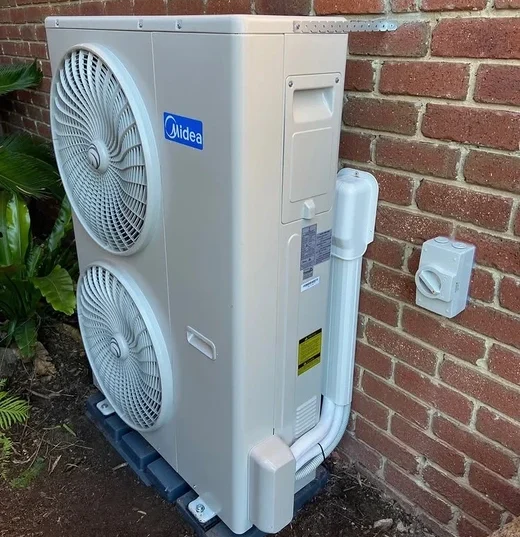
If you’ve got several rooms that need cooling but don’t want an outdoor unit for each one, a multi-head split system is probably the setup you’ve been picturing without knowing the name for it. One outdoor condenser, several indoor units, each room controlled on its own. It’s one of the more common ways Melbourne homes handle cooling once they’ve outgrown a single split system but don’t want to commit to ducted air conditioning.
This guide walks through how multi-head split systems actually work, where they make sense, and what tends to trip people up when they’re deciding between this and other cooling options.
What Is a Multi-Head Split System?
A multi-head split system is exactly what it sounds like: one outdoor compressor unit connected to multiple indoor units, usually two to five, though some setups run more. Each indoor unit sits in a different room and can be switched on, off, or set to a different temperature independently of the others.
This is different from a standard single-head split system, which pairs one outdoor unit with one indoor unit for one room. It’s also different from ducted air conditioning, which uses a single indoor unit hidden in the ceiling to push air through ductwork into multiple rooms via vents.
Multi-split air conditioning systems sit in a kind of middle ground. You get room-by-room control like a split system, but with the single-outdoor-unit convenience that’s usually associated with ducted setups.
How One Outdoor Unit Cools Multiple Rooms
The outdoor unit in a multi-head split system houses the compressor, which is the part doing the heavy lifting of moving refrigerant through the system. Instead of feeding just one indoor unit, the compressor is sized and engineered to handle refrigerant lines running out to several indoor units at once.
Here’s the practical part: each indoor unit only pulls what it needs from the shared refrigerant loop. If you’re only cooling the living room and leaving the bedrooms off, the system directs capacity there rather than running everything at once. Most modern multi-head systems use inverter compressors, which means the compressor adjusts its output rather than switching fully on and off, so it can respond to several rooms calling for different amounts of cooling at the same time.
The indoor units themselves are the same wall-mounted (or occasionally ceiling cassette) style you’d see on any split system installation. What changes is what’s happening behind the wall, where refrigerant piping and electrical wiring run back to a shared outdoor compressor rather than each unit having its own.
Multi-Head vs Single-Head Split Systems
This is usually the first fork in the road for homeowners: do you need one multi-head system, or several single-head systems?
| Factor | Multi-Head Split System | Single-Head Split System |
| Outdoor units required | One | One per indoor unit |
| Rooms covered | Multiple, independently controlled | One room per system |
| Outdoor space needed | Less (one unit, larger footprint) | More (multiple units) |
| Installation complexity | Higher, more refrigerant lines | Lower, straightforward per room |
| Flexibility to add rooms later | Limited by outdoor unit capacity | Easy, install another single system |
| Best suited to | Homes needing 3+ rooms cooled | Homes needing one or two rooms cooled |
Neither option is universally better. If you’re only cooling a main bedroom and a living area, two single-head split systems installation jobs might genuinely be simpler and give you more flexibility down the track. If you’re trying to cool four or five rooms and don’t want four or five outdoor units cluttering the side of your house, a multi-head system starts to make a lot more sense.
Where Multi-Head Split Systems Work Best
A few situations come up again and again with Melbourne homeowners considering this option:
- Limited outdoor space. Townhouses, units, and homes with narrow side access often can’t fit multiple outdoor condensers. One unit solves that.
- Heritage or character homes. Where ductwork isn’t practical or would compromise the building, multi-head systems avoid the ceiling cavity work that ducted air conditioning requires.
- Staged renovations. Some multi-head systems allow additional indoor units to be added later, within the outdoor unit’s capacity, which suits homes being renovated room by room.
- Households with different comfort preferences. Because each indoor unit runs independently, one person can have the bedroom cooler than someone else has the living room, without one thermostat dictating the whole house.
- Body corporate restrictions. Some apartment buildings limit the number of external units permitted on a facade, which rules out multiple single-head systems.
Multi-Head Split Systems vs Ducted Air Conditioning
The other common comparison is between a multi-head split system and ducted air conditioning. Both use one outdoor unit, so the decision usually comes down to how the home is set up and how the household actually uses different rooms.
Ducted systems hide the indoor unit and all the distribution ductwork in the roof space, leaving only discreet vents visible in each room. That’s a cleaner aesthetic, but it usually means every room is on one temperature zone (unless you pay for a zoning add-on), and it requires roof space that not every home has, particularly older Melbourne properties with limited ceiling cavities.
Multi-head split systems, on the other hand, have a visible indoor unit in each room, but each one is genuinely independent, no shared zoning logic required, and no roof cavity needed. For homes without accessible ceiling space, this is often the deciding factor rather than aesthetics.
What to Consider Before Installing a Multi-Head System
A few practical things are worth thinking through before committing:
- Outdoor unit capacity. Each outdoor unit can only support so many indoor units and so much combined cooling capacity. An installer needs to calculate this against your room sizes, not just count how many rooms you want covered.
- Simultaneous use. If every indoor unit runs at full capacity at the same time, performance can dip slightly compared to each room having its own dedicated outdoor unit. This matters more in larger homes than smaller ones.
- Placement of the outdoor unit. Because it’s doing more work, the outdoor unit for a multi-head system is often physically larger than a single-head equivalent, so it needs a spot with proper airflow clearance and, ideally, some noise buffering from bedroom windows.
- Electrical capacity. Multi-head systems draw more power than a single split system, so your switchboard needs to be able to handle the additional load, particularly in older homes.
Professional Installation Matters
Multi-head split system installation involves running refrigerant lines to multiple rooms, correctly sizing the system for the home, and wiring it safely into the switchboard. This isn’t the kind of job where a slightly-too-small outdoor unit just underperforms quietly; it usually means every room connected to it runs below expectations.
In Victoria, air conditioning installation involving refrigerant handling must be carried out by a licensed technician, and any associated electrical work has to meet the wiring rules set out by Energy Safe Victoria, the state’s regulator for electrical and gas safety. It’s worth checking that whoever quotes your installation holds the right licences for both the electrical and refrigerant handling components of the job, not just one or the other.
Conclusion
Multi-head split systems give Melbourne homeowners a practical way to cool several rooms from a single outdoor unit, without the compromises that come with either multiple standalone systems or full ducted air conditioning. The right setup depends on how many rooms need covering, how your home is laid out, and how much independent control each room actually needs.
If you’re weighing up a multi-head system against other options for your home, Goldworks Electrical can talk through what’s realistic for your property and provide a proper assessment before any work goes ahead. Get in touch with our team to arrange a site visit and find out what a multi-head split system would look like in your home.
Frequently Asked Questions
1. How many indoor units can a multi-head split system run?
Most residential multi-head systems support between two and five indoor units, though this depends on the outdoor unit’s capacity. Your installer will size the system based on the number of rooms and their square metreage, not just a fixed number.
2. Do all the indoor units have to run at the same temperature?
No. Each indoor unit in a multi-head system operates independently, so you can set different temperatures, or turn individual units off, without affecting the others.
3. Is a multi-head split system noisier than a single split system?
The outdoor unit is generally larger to support multiple indoor units, but that doesn’t necessarily mean louder. Placement and the unit’s noise rating matter more than the fact that it’s a multi-head system specifically.