
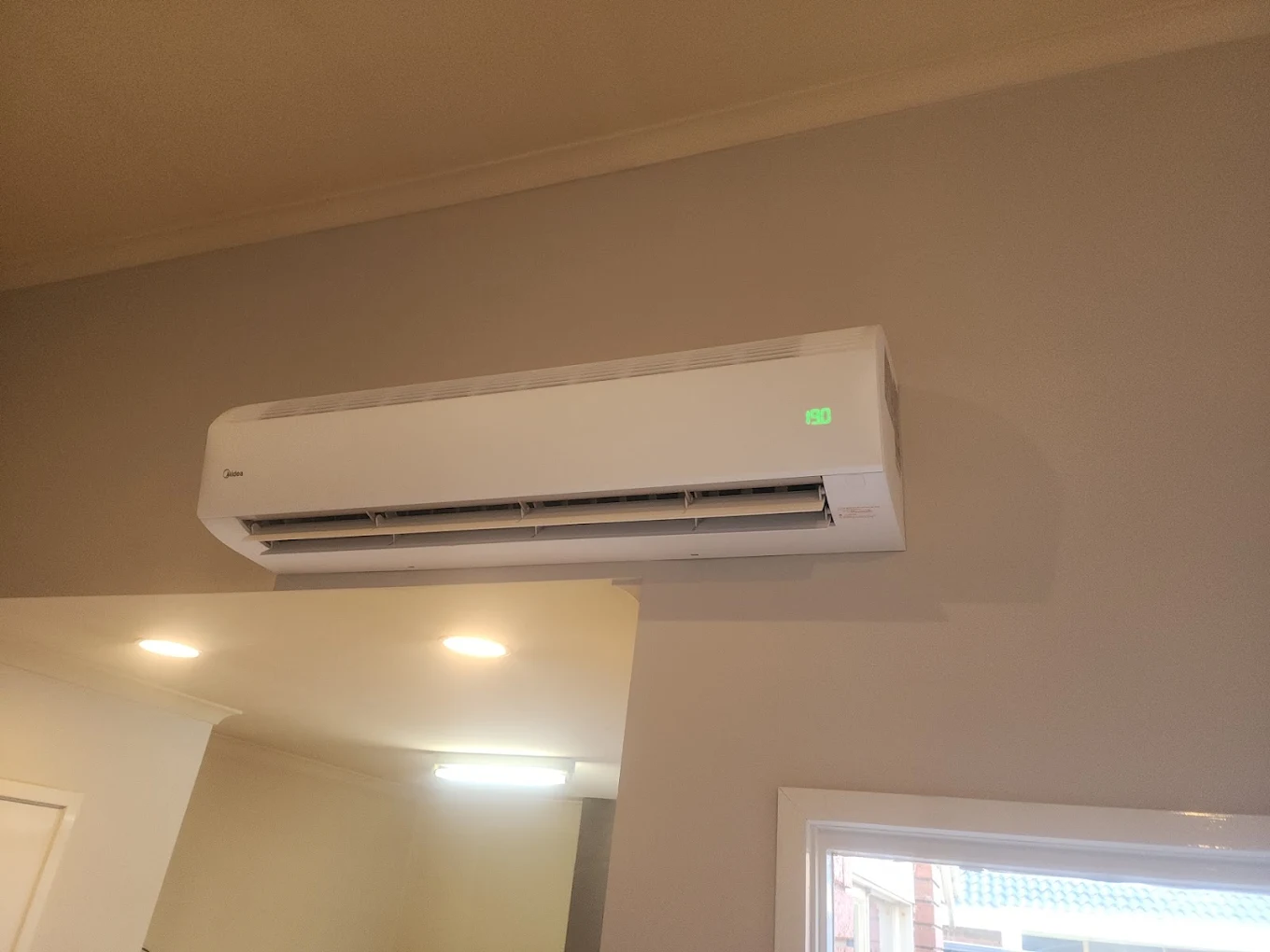
Most people don’t decide to skip AC maintenance – it just quietly slips down the to-do list. A busy winter comes and goes, summer arrives, and the system that used to cool the house in ten minutes now takes half an hour, if it works at all. If any of that sounds familiar, you’re not alone, and the good news is your air conditioner is usually telling you long before it actually breaks down. At Goldworks Electrical, we get called out to a lot of units that could have been saved a costly repair bill if the early warning signs had been caught sooner. This guide walks through what those signs actually look like, why they show up, and what tends to happen if they’re left alone.
Why AC Maintenance Gets Skipped in the First Place
It’s rarely neglected in the deliberate sense. Split systems and ducted units are built to run quietly in the background, and unless something obviously breaks, there’s no built-in reminder to get it looked at. Filters get dusty gradually. Coils lose efficiency a percentage point at a time. None of it announces itself the way a tripped switchboard or a dead power point does – so AC maintenance ends up being the thing that only happens after something goes wrong, rather than the thing that prevents it.
The problem is that air conditioners don’t fail all at once. They degrade, and the warning signs below are usually the system’s way of asking for attention before a full breakdown forces the issue.
Warning Sign 1: Weak or Uneven Airflow
If one room barely gets cool while another is freezing, or the airflow from the vents feels noticeably weaker than it used to, that’s often the first sign that regular AC maintenance has lapsed. A clogged filter is the most common cause – it restricts airflow across the coil, which forces the compressor to work harder for less output. Blocked ducts, a dirty blower, or a failing fan motor can produce similar symptoms.
On their own, weak airflow issues are usually cheap and quick to resolve. Left unaddressed for months, though, they put ongoing strain on the compressor, which is the most expensive component to replace in the whole system.
Warning Sign 2: Energy Bills Creeping Up
A well-maintained air conditioner should use roughly the same amount of energy to do the same job, season after season. If your power bills are climbing even though your usage habits haven’t changed, that’s a strong indicator the unit is working harder than it should be. Dirty coils, low refrigerant, and dust build-up inside the unit all reduce efficiency, and the system compensates by drawing more power to hit the same temperature.
This is one of those warning signs that’s easy to write off as “energy prices going up” – and sometimes that’s exactly what it is. But if your bill has jumped disproportionately compared to previous years, it’s worth ruling out the air conditioner before assuming it’s purely a pricing issue.
Warning Sign 3: Unusual Noises or Smells
A healthy system runs with a fairly consistent hum. Rattling, buzzing, grinding, or a high-pitched squeal are all signs something mechanical has shifted out of place – often a loose fan blade, a failing motor bearing, or debris caught in the unit. Musty or burning smells are a different category of concern altogether: musty odours usually point to mould or mildew building up in the ducts or drip tray, while a burning smell can indicate an electrical fault and should be treated as urgent rather than something to monitor.
These are the kind of issues that routine AC maintenance is specifically designed to catch early, before a small mechanical fault turns into a component failure.
Warning Sign 4: Water Leaks or Excess Moisture
Split systems and ducted units both rely on a condensate drain to remove the moisture pulled out of the air during cooling. When that drain gets blocked – which happens gradually through algae and dust build-up – water backs up and can leak from the indoor unit, stain ceilings, or pool around the outdoor unit. It’s one of the more visible warning signs, but by the time it’s visible, the blockage has usually been building for a while.
Warning Sign 5: The System Short-Cycles or Won’t Hold Temperature
Short-cycling – where the unit switches on and off far more frequently than normal – is often linked to a refrigerant issue, a faulty thermostat sensor, or a compressor that’s starting to fail. If the room never quite reaches the set temperature, or overshoots and undershoots repeatedly, that inconsistency is rarely something that resolves on its own.
| Warning Sign | Likely Cause | Urgency |
| Weak or uneven airflow | Dirty filter, blocked ducts | Low–Medium |
| Rising energy bills | Dirty coils, low refrigerant | Medium |
| Unusual noises | Loose parts, worn motor | Medium–High |
| Burning smell | Electrical fault | High – act immediately |
| Water leaks | Blocked condensate drain | Medium |
| Short-cycling | Refrigerant or thermostat fault | High |
What Happens If These Signs Are Ignored
This is where the cost difference becomes obvious. A single AC maintenance visit is typically a fixed, predictable cost. Air conditioning repairs that stem from months of ignored warning signs are not – a seized compressor, a failed circuit board, or extensive coil corrosion can cost several times more than the servicing that would have prevented it. It’s the same logic as changing the oil in a car: the maintenance is cheap, the neglect isn’t.
We regularly handle split system repairs for units that were otherwise in good condition but had been run for years without a proper service. In a lot of those cases, the underlying problem was something a routine check would have picked up early – low refrigerant, a failing capacitor, a blocked filter restricting airflow to the point of overheating the compressor. If your system is already showing two or more of the warning signs above, it’s worth getting a technician to run a full inspection rather than waiting for a complete failure.
How Often Should AC Maintenance Actually Happen?
For most Melbourne homes, an annual service before the summer heat sets in is the standard recommendation – enough to catch developing issues before peak-load months put the most strain on the system. Homes running the unit heavily for both heating and cooling, or properties near the coast where salt air accelerates corrosion on outdoor units, often benefit from six-monthly servicing instead. The Victorian Government’s own guidance on getting the most out of heating and cooling systems points to the same conclusion: regular maintenance and cleaning of filters ensures your unit continues to work well for longer, which lines up with what we see on service calls across the region.
Get Your System Checked Before the Next Heatwave
An air conditioner rarely fails without warning – it just tends to warn you in ways that are easy to dismiss until the day it stops altogether. If any of the signs above sound familiar, the sensible move is to get it looked at now rather than waiting for a mid-summer breakdown, when both the discomfort and the callout demand are at their highest.
Goldworks Electrical provides air conditioning servicing and split system repairs across Melbourne’s south-east, including Frankston, Langwarrin, Carrum Downs, and Skye. Get in touch with our team today to book a maintenance check and keep your system running reliably through the season ahead.