
A power point that sparks when you plug something in. A faint burning smell near the switchboard that wasn’t there yesterday. Lights that dim and flicker for no obvious reason. Most homeowners notice these things and then talk themselves out of worrying about them – it’s probably nothing, right?
Sometimes it is nothing. Often, it isn’t. Electrical faults rarely stay small, and the difference between a minor repair and a house fire usually comes down to how quickly someone calls a qualified electrician Melbourne homeowners can trust. This guide walks through the warning signs that genuinely warrant an emergency call, the ones that can wait for a scheduled appointment, and what actually happens when a licensed electrician arrives at your door in the middle of the night.
What Actually Counts as an Electrical Emergency
Not every electrical hiccup is an emergency, and not every emergency looks dramatic. Some of the most dangerous faults are quiet – a switchboard slowly overheating behind its cover, for instance, gives almost no visual clue until it’s too late.
Broadly, an electrical fault becomes an emergency when there’s an immediate risk to safety or property. That includes fire risk, shock risk, or a total loss of power that leaves a home unsafe (no lighting, no working fridge, no heating in winter). Here’s a rough breakdown of what tends to fall into each category.
| Situation | Likely Cause | Urgency Level |
| Visible sparks from a power point or switch | Loose wiring, damaged outlet, or moisture ingress | Emergency – call immediately |
| Burning smell near an outlet, switchboard or appliance | Overheated wiring, failing insulation, overloaded circuit | Emergency – call immediately |
| Switchboard repeatedly tripping | Circuit overload, faulty appliance, or ageing switchboard | Same-day attention recommended |
| Warm or discoloured power point cover | Loose connection generating heat | Same-day attention recommended |
| Flickering lights across the whole house | Loose main connection or supply issue | Emergency if paired with other symptoms |
| One flickering light fitting | Faulty bulb or fitting | Can usually wait for a scheduled visit |
| Buzzing or humming from a switchboard | Arcing connection | Emergency – call immediately |
| Power point feels warm to touch | Overheating connection | Same-day attention recommended |
If you’re ever unsure which column a symptom falls into, it’s worth erring on the side of caution and calling anyway. A licensed electrician can usually tell you over the phone whether it warrants an immediate visit.
Burning Smell From Electrical Outlets: Don’t Wait This One Out
Of everything on this list, a burning smell from electrical outlets is the sign most homeowners underestimate. Unlike sparks, which are visible and alarming, a burning smell can be faint and easy to explain away – maybe it’s dust burning off a heater, maybe it’s something in the kitchen.
Overheated wiring insulation has a distinct, slightly acrid smell that’s different from ordinary household smoke. In most cases, it points to one of the following:
- A loose connection inside the wall or power point, generating heat through resistance
- Insulation on old wiring breaking down after years of use
- An overloaded circuit carrying more load than it was designed for
- Moisture that’s made its way into an outlet or junction box
Left alone, that heat can char the surrounding timber framing or insulation, and that’s how house fires start – not from an obvious blaze, but from a slow build-up nobody noticed in time.
If you smell burning near an outlet or the switchboard:
- Switch off the power at that circuit if you can safely reach the switchboard.
- Unplug anything connected to the affected outlet.
- Don’t touch the outlet, cover plate, or switchboard if it feels warm.
- Call a licensed emergency electrician straight away rather than waiting until morning.
Sparking Power Points and What They’re Telling You
A brief spark when plugging something in isn’t always sinister – a tiny flash from static or a slightly worn plug is common and usually harmless. But repeated sparking, sparking that leaves a scorch mark, or sparking that happens even when nothing is being plugged in is a different story entirely.
Power point repairs for this kind of fault usually come down to one of a few causes:
- A loose internal connection that arcs under load
- Water or moisture that’s found its way into the wiring or outlet
- An outlet that’s simply worn out after years of plugging and unplugging
- Wiring that’s been damaged by renovation work, pests, or age
None of these is things to test or tighten yourself. Victorian law requires this type of work to be carried out by a licensed electrician, and doing it yourself is both illegal and genuinely dangerous.
Switchboard Trouble: When It’s More Than a Tripped Switch
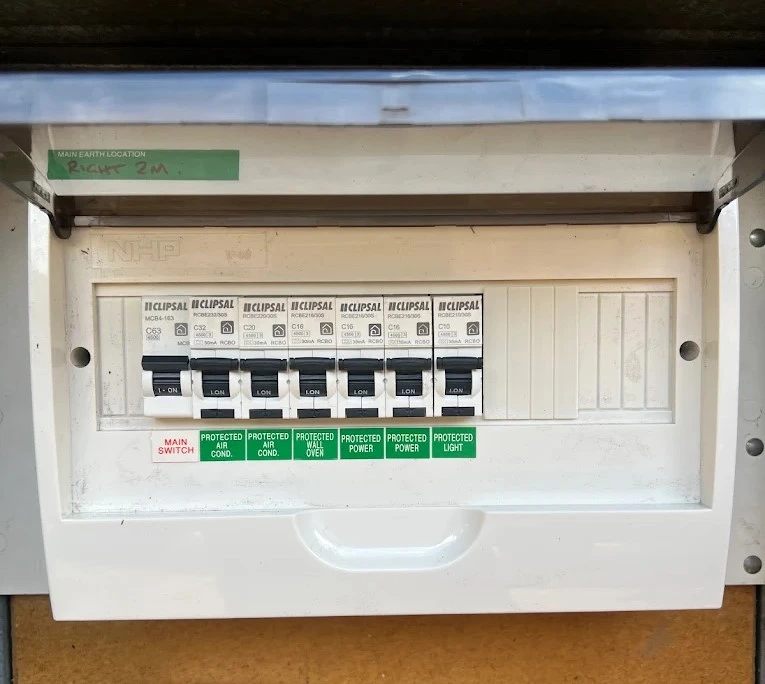
Your switchboard is the control centre for every circuit in the house, so when it starts misbehaving, it’s worth paying attention. A switch that trips once because you overloaded a power board with too many appliances isn’t necessarily a crisis. A switchboard that trips repeatedly, buzzes, feels warm, or shows visible scorching around the fuses is a different matter.
Signs your switchboard may need more than a reset:
- It trips more than once or twice in the same week without an obvious cause
- You can hear a buzzing or humming sound coming from the board
- The panel or fuses feel warm to touch
- There’s visible scorching, discolouration, or a burning smell near the fuses
- It still uses old ceramic fuses rather than modern circuit breakers
Older switchboards – particularly the ceramic fuse type still found in plenty of south-east Melbourne homes – simply weren’t built for the electrical load of a modern household running air conditioners, EV chargers, and a dozen smart devices at once. In these cases, the long-term fix usually isn’t a repair at all; it’s a proper switchboard upgrade that brings the home’s wiring up to current safety standards.
What Should and Shouldn’t Wait
It helps to know which faults genuinely need a 24-hour electrician and which ones are fine to book in during business hours. Here’s a simple way to think about it.
| Call immediately | Book a scheduled visit |
| Sparks, burning smell, or visible scorching | A single light that flickers occasionally |
| Switchboard buzzing, humming, or hot to touch | Minor issues discovered during a home inspection |
| Total loss of power with no known outage in the area | Adding new power points or outdoor lighting |
| Shocks or tingling from an appliance or tap | General wiring upgrades with no immediate fault |
| Exposed or damaged wiring | Routine safety switch testing |
How Emergency Electrical Fault Finding Works
When a residential emergency electrician arrives at a property, the first job isn’t fixing anything – it’s finding the actual source of the problem. Electrical fault finding involves isolating circuits, testing connections with proper equipment, and working through the switchboard and affected outlets methodically until the fault is located.
This matters because symptoms and causes don’t always match up neatly. A burning smell near one power point might actually trace back to a connection several metres away inside the wall cavity. Rushing this step – or skipping it to patch over the visible symptom – is how faults come back a few weeks later, sometimes worse than before.
A typical emergency callout follows a fairly consistent process:
| Step | What Happens |
| 1. Isolate | The affected circuit is switched off at the switchboard to make the area safe |
| 2. Inspect | The electrician checks outlets, wiring and connections for visible damage |
| 3. Test | Testing equipment is used to trace the fault through the circuit |
| 4. Diagnose | The root cause is identified, not just the visible symptom |
| 5. Repair or advise | A straightforward fault is repaired on the spot; a bigger issue is explained with next steps |
Once the fault is isolated, a qualified electrician will explain what’s needed: sometimes it’s a straightforward repair completed on the spot, sometimes it points to a bigger issue like ageing wiring or an overloaded switchboard that needs follow-up work.
Government Guidance on Electrical Safety
Energy Safe Victoria, the state’s electrical and gas safety regulator, is clear on this point: electrical work should never be attempted by anyone other than a licensed professional. It’s sound advice, and it applies just as much to a suspicious smell as it does to a full switchboard failure.
Its guidance for homeowners recommends:
- Engaging a registered electrical contractor rather than attempting repairs yourself
- Confirming the electrician holds a current licence before work begins
- Asking for a Certificate of Electrical Safety once the job is finished
- Never touching a switchboard or exposed wiring that’s been damaged by storms, floods or fire
The risk of DIY electrical work simply isn’t worth it, no matter how minor the fault looks.
Conclusion
Electrical faults don’t tend to fix themselves, and the ones that seem minor today – a faint smell, an occasional spark, a switch that trips more than it used to – are often the ones that escalate while nobody’s home. Knowing the difference between a genuine emergency and something that can wait for a scheduled visit is the easiest way to protect your home and the people in it, and when in doubt, it’s always safer to make the call.
Goldworks Electrical provides a range of electrical and air conditioning services across Melbourne, including fault finding and repairs, switchboard upgrades, lighting and power point installations, rewiring, and electrical work for new builds and renovations. If you’ve noticed an electrical issue in your home, get in touch with our team to discuss the right solution for your property.