
Picture two homeowners living less than ten kilometers apart in Melbourne. Both purchase the same air conditioner, choose the same brand, and book installation during the same week. Yet one receives a quote that is hundreds of dollars higher than the other. Split system installation is rarely priced based on the unit alone, because every property presents its own technical challenges before the first bracket is even fixed to the wall.
Many people expect the biggest expense to be the air conditioner itself. In reality, experienced electricians spend just as much time assessing switchboards, cable routes, wall construction, access points, and installation conditions. These details determine how much labour, equipment, and preparation are required to complete the job safely and neatly.
For Melbourne homeowners, local housing styles, changing weather, renovation trends, and stricter expectations around energy efficiency all influence installation costs. Understanding these practical cost drivers helps you plan effectively, making you feel more confident about long-term savings instead of just focusing on the initial quote.
Factors Behind Different Installation Quotes
When requesting a quote for split system installation, many homeowners compare only the final price. Professional installers, however, calculate far more than the cost of mounting two units and connecting pipes.
Before providing a quotation, they usually inspect several parts of the property.
- Available capacity within the existing switchboard.
- Distance between indoor and outdoor units.
- Ease of running refrigerant pipework and electrical cabling.
- Wall and ceiling construction.
- Accessibility for installation equipment.
- Future servicing access.
A newly built home in Clyde North with open roof access and a modern switchboard can often be completed in less time than a renovated Victorian terrace in Fitzroy. In many older properties, installers first check whether the switchboard has capacity for a dedicated circuit and current safety devices. If upgrades are required before the air conditioner can be connected, both labor and material costs naturally increase.
This is why understanding property conditions is essential when comparing installation prices, as it prevents unrealistic expectations based solely on initial quotes.
How Air Conditioner Installation Changes
Every Melbourne suburb tells a different housing story. Inner-city neighborhoods feature heritage terraces and apartments, middle suburbs contain brick-veneer family homes, while outer growth corridors continue to add new townhouses and estates. These differences directly influence split system installation, affecting labour requirements, equipment placement, and the overall project cost.
Consider these common situations.
Property Type | Installation Consideration | Possible Cost Impact |
| Victorian terrace | Solid brick walls, limited roof access, and older electrical systems may require additional preparation. | Higher labor costs |
Weatherboard home | Easier cable routing, but existing wiring may need assessment before installation. | Moderate variation |
| Modern townhouse | Compact layouts and concealed services can make pipe and cable routing more complex. | Depends on installation complexity |
Apartment | Body corporate requirements and restricted placement for the outdoor unit may require additional planning. | Additional planning costs |
| Commercial office | Installation may need to be completed after business hours to minimize operational disruption. | Higher labor scheduling cos |
For example, an apartment in Southbank may require approval for the outdoor unit location, while a family home in Doncaster might allow ground-level installation beside the house. Neither situation is unusual, but each creates different installation requirements. Rather than offering standard pricing, experienced contractors assess how the building itself influences split system installation, helping homeowners receive a solution that suits their property’s layout, electrical setup, and long-term comfort needs.
Why Reverse Cycle Air Conditioning Pays
Melbourne’s weather rarely stays predictable. A cool morning can quickly become a warm afternoon before temperatures fall again after sunset. Because of these rapid seasonal shifts, many households now choose reverse cycle air conditioning instead of installing separate heating and cooling systems.
The upfront investment may be slightly higher, but homeowners often see better value over time through improved energy efficiency and year-round comfort.
During split system installation, installers also consider how each room is used. A north-facing living area exposed to afternoon sun usually requires different capacity planning than a shaded bedroom used mainly at night. Choosing the right system from the start helps avoid unnecessary electricity use and reduces strain on equipment during Melbourne’s hottest summer days and coldest winter mornings.
Young professionals working from home have also changed the way systems are selected. Instead of cooling only a lounge room during weekends, many households now expect consistent temperatures throughout the working day, making system sizing more important than ever.
Wall-Mounted Air Conditioner Placement Decisions
Many homeowners already have a preferred location for their wall-mounted air conditioner before the installer arrives. While appearance is important, professional installers often recommend a different position because performance depends on much more than visual balance.
Several practical factors influence placement.
- Air should circulate throughout the room rather than blowing directly onto seating areas.
- Heat generated from kitchens or large windows should be considered.
- Refrigerant pipework should remain efficient without unnecessary bends.
- Future servicing should be possible without removing cabinetry or furniture.
- The outdoor unit location should allow practical pipe routing.
Imagine an open-plan home in Point Cook where the obvious wall sits directly opposite large west-facing windows. During summer afternoons, that area receives significant heat, forcing the system to work harder. Moving the indoor unit to a better-positioned internal wall may slightly increase installation labour, but it often improves comfort and operating efficiency for years afterwards.
This attention to planning is one reason split system installation should never be viewed as simply mounting equipment on the nearest available wall. It’s about creating a system that performs efficiently in the way your home is actually lived in, empowering you to make informed decisions for lasting comfort.
Indoor Air Conditioning Unit Sizing
Choosing the right indoor air conditioning unit is about much more than matching the room’s floor area. Installers look at how the space behaves throughout the day because that determines how hard the system will need to work.
A few common examples illustrate why sizing is rarely straightforward.
- A home office with two monitors, computers, and afternoon sun generates more heat than a spare bedroom.
- Open-plan living areas allow cool air to travel further but require greater cooling capacity.
- High ceilings increase the volume of air that needs to be conditioned.
- Large glass doors facing north or west can significantly increase heat gain during summer.
When planning split system installation, experienced installers assess insulation, window orientation, ceiling height, occupancy, and room usage together rather than relying on a simple room-size chart. This helps homeowners avoid purchasing systems that constantly run without achieving consistent comfort or oversized units that cycle on and off too frequently.
Outdoor Condenser Unit Installation Challenges
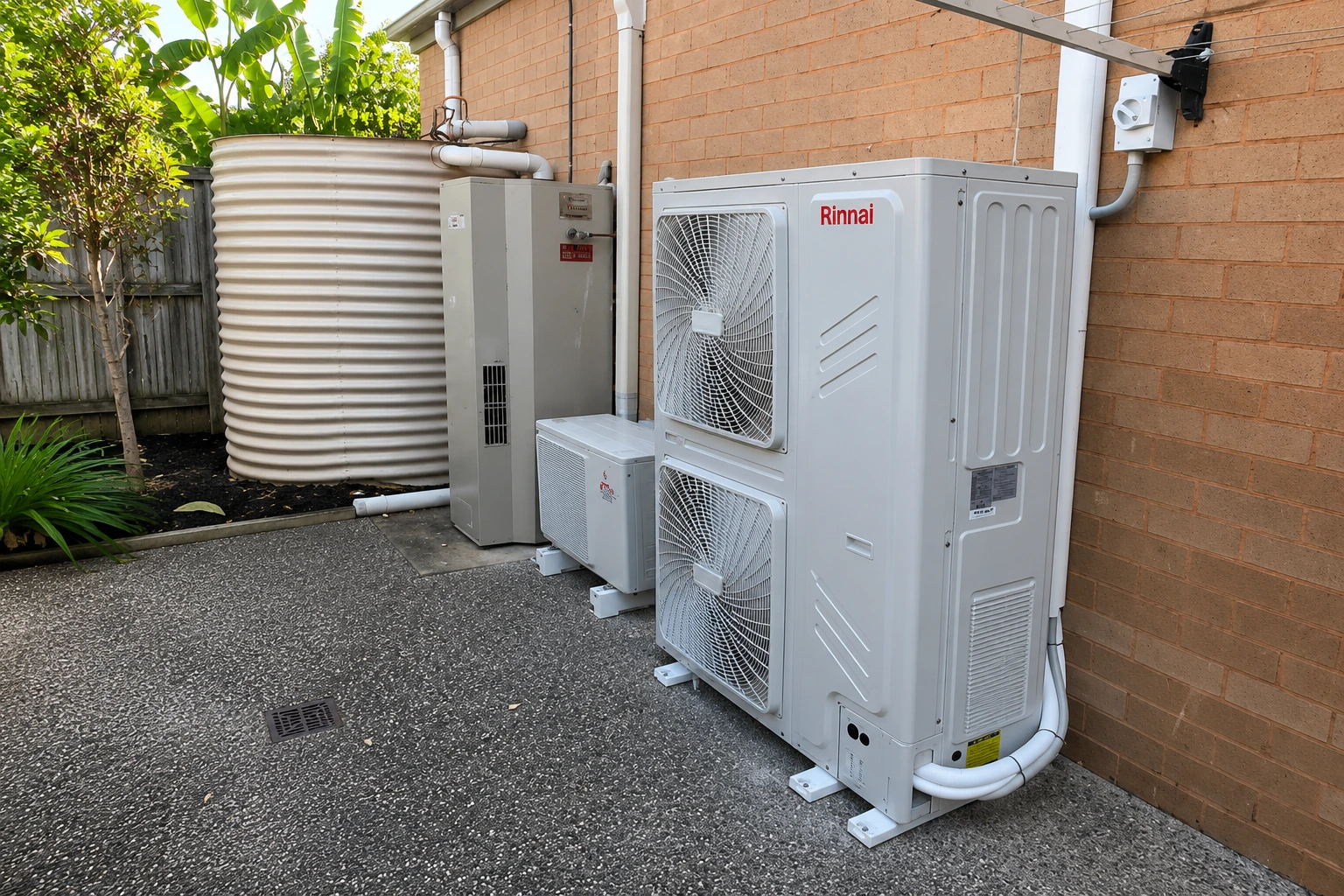
The outdoor condenser unit is often overlooked during the buying process, yet its location can influence installation costs just as much as the indoor unit.
Some homeowners prefer to hide the condenser behind landscaping or at the rear of the property. While this may improve appearance, it can require longer refrigerant pipework, additional electrical cabling, or more complex mounting solutions.
For example, installing a condenser in a narrow side passage with limited space can increase costs due to longer pipework and complex mounting, highlighting the importance of site accessibility in cost planning.
A typical example is two neighboring homes in Glen Waverley. Both purchase identical systems, but one allows the condenser to be installed beside the garage, while the other requires roof mounting to preserve outdoor entertaining space. The second project involves additional safety equipment, a longer installation time, and more labour, which naturally increases the overall quote.
These practical decisions explain why split system installation costs vary even when homeowners choose the same equipment.
Hidden Costs During Split System AC Installation
One of the biggest differences between installation quotes comes from electrical work that homeowners cannot easily see. Before connecting a new split system installation, electricians inspect whether the existing switchboard can safely support the additional electrical load. If there is no dedicated circuit, limited breaker capacity, or outdated safety devices, upgrades may be recommended before the system is commissioned.
These upgrades are particularly common in older Melbourne homes built long before modern heating, cooling, induction cooking, and electric vehicle charging became widespread. While the extra work increases the initial investment, it improves electrical safety and reduces the likelihood of future faults.
All split system installations should be completed by a licensed electrician and comply with applicable Australian electrical safety requirements, including AS/NZS 3000 (the Wiring Rules), to help ensure safe and reliable operation.
Rather than viewing these upgrades as unexpected costs, homeowners should consider them part of building a reliable electrical system that supports both current and future energy demands.
Looking Beyond The Initial Installation Cost
The lowest installation quote is not always the lowest long-term cost. A properly planned system often delivers savings long after the installation team has left the property.
Many future expenses can be reduced through quality workmanship and correct system selection from the beginning. A well-planned installation continues to deliver value long after the work is complete. Correct equipment placement can reduce the likelihood of unexpected air conditioning repairs, while keeping the system accessible makes future air conditioning servicing faster, simpler, and more cost-effective.
For young Melbourne homeowners, another consideration is future flexibility. Many households are adding solar panels, battery storage, or electric vehicle chargers over time. Choosing an installer who assesses overall electrical capacity during split system installation helps ensure today’s cooling system fits comfortably within tomorrow’s energy plans rather than requiring expensive alterations later.
Rather than comparing quotes based solely on price, ask what each installer has included. A detailed assessment, careful planning, and quality workmanship often provide greater value than saving a small amount upfront only to face additional costs in the years ahead.
Conclusion
The property shapes the cost of Split System Installation in Melbourne, not just the air conditioner. Housing style, electrical infrastructure, equipment placement, accessibility, seasonal demand, and long-term planning all influence the final investment.
Understanding these factors allows homeowners to compare quotes more accurately and choose a solution that balances performance, reliability, and value. Regular air conditioning maintenance also helps protect your investment by keeping the system operating efficiently throughout Melbourne’s changing seasons.
If you’re planning a new air conditioning system for your home or business, contact Gold Works Electrical today. Their experienced team can assess your property, explain the factors affecting installation costs, and recommend a solution tailored to your space and comfort needs.
Frequently Asked Questions
1. Why can Split System Installation quotes differ between Melbourne homes?
Even when the air conditioner is identical, Split System Installation costs can vary because of factors such as switchboard capacity, property access, wall construction, pipe length, and outdoor unit location, all of which influence labour and installation complexity.
2. When should I book Split System Installation in Melbourne?
Spring and autumn are often the best times to schedule Split System Installation because appointment availability is usually better than during peak summer. Planning ahead also gives homeowners more time to choose the right system and complete any required electrical upgrades before extreme temperatures arrive.
3. How can Split System Installation help keep long-term air conditioning costs under control?
Choosing the correct system size and investing in professional split system installation provides a strong foundation for long-term performance. Scheduling regular air conditioning maintenance helps keep the system operating efficiently, while proper care may also delay the need for a complete air conditioning replacement, helping homeowners maximize the lifespan of their equipment.